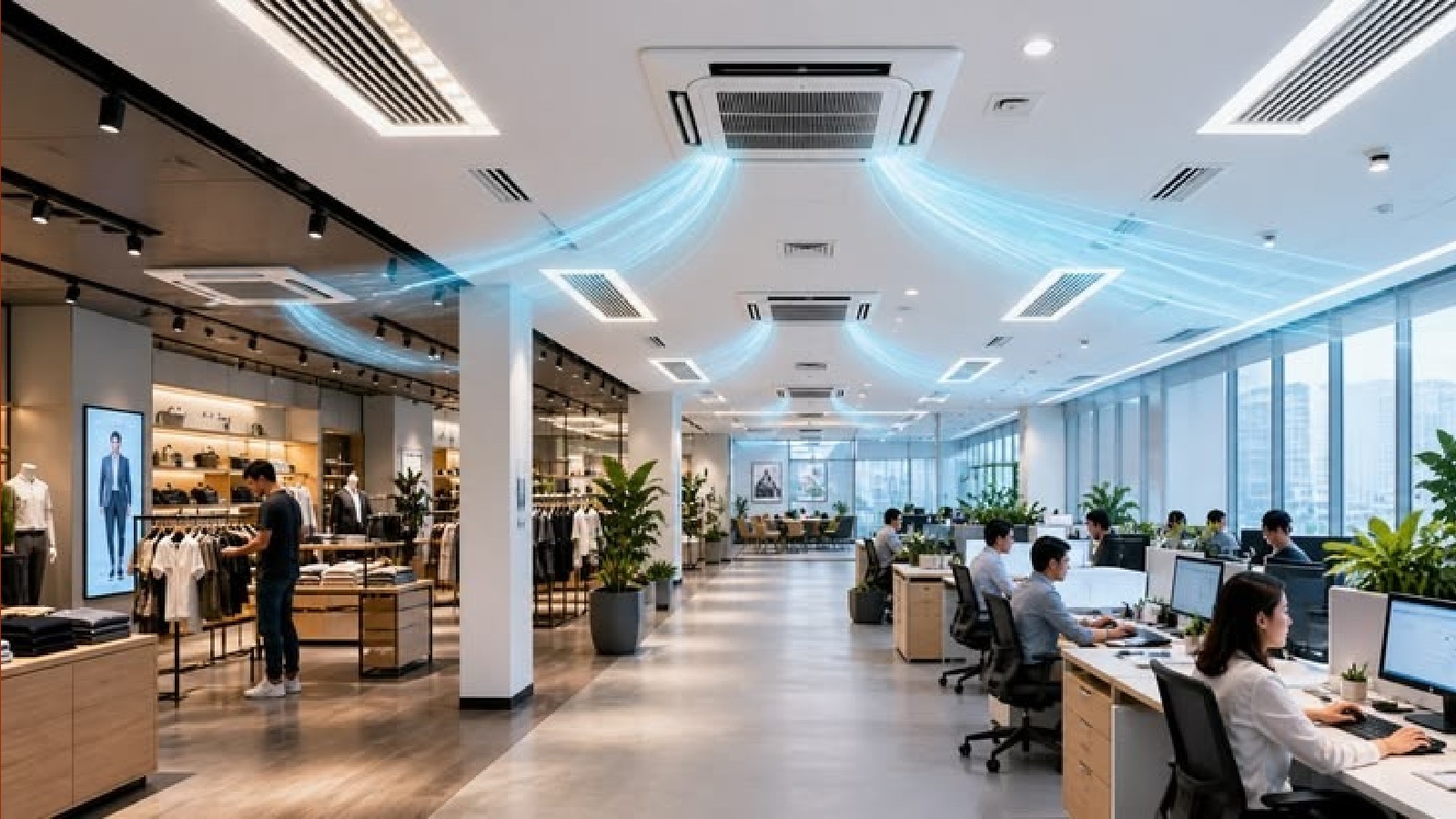
Interview with Mr. Sourabh Nande

About this Interview

With more than 20 years of experience in the HVAC industry, **Sourabh Nande** has built his career around understanding the engineering challenges and practical realities behind well-designed building environments. Having worked with leading multinational organizations and across commercial, healthcare, industrial, and hospitality projects, Sourabh brings a strong combination of technical expertise, design experience, and attention to detail. For him, HVAC design goes beyond equipment selection and technical specifications. It is about understanding how a building functions, anticipating challenges, and creating solutions that are efficient, reliable, and practical in the real world. In this conversation, Sourabh shares his journey, experiences, and perspective on the evolving world of HVAC engineering.

What initially attracted me to HVAC was the fact that it combines science, engineering, problem-solving, and real-world impact. Unlike many engineering disciplines that remain behind the scenes, HVAC directly influences how people feel, work, heal, learn, and live inside a building.

Conversation

The Interview

01

Tell us about your journey in the HVAC industry.

“

My journey in the HVAC industry has been driven by a passion for engineering and a desire to create environments that are comfortable, efficient, and sustainable. Over the years, I have had the opportunity to work on a wide range of projects including industrial facilities, pharmaceutical plants, hospitals, commercial buildings, educational institutions, hospitality projects, and data centers. What initially attracted me to HVAC was the fact that it combines science, engineering, problem-solving, and real-world impact. Unlike many engineering disciplines that remain behind the scenes, HVAC directly influences how people feel, work, heal, learn, and live inside a building. With every project, I gained deeper insights into how building performance can be improved through thoughtful design. Today, after years of experience, my focus remains the same: designing solutions that provide long-term value, operational efficiency, and exceptional indoor environments.

02

What inspired you to specialize in HVAC consultancy?

“

I have always enjoyed solving complex engineering challenges. HVAC consultancy appealed to me because it requires both technical expertise and a deep understanding of client requirements. Every building is unique. A pharmaceutical plant has different requirements than a hospital, and a data center requires a completely different approach than a hotel. I found it fascinating how HVAC design can be tailored to support the specific operational objectives of a facility. Consultancy also allows me to influence projects at the design stage, where critical decisions are made. A well-thought-out design can save clients substantial operational costs and prevent future challenges. Being part of that decision-making process is what motivates me every day.

03

What services does VAYU HVAC provide?

“

At VAYU HVAC, we provide comprehensive HVAC design consultancy services across multiple industries. Our expertise includes HVAC design, cleanroom and controlled environment solutions, cold rooms, ventilation systems, industrial process cooling, energy audits, HVAC retrofitting, and system optimization. We also support clients with technical due diligence, value engineering, project management consultancy, and commissioning assistance. As the industry moves toward smart infrastructure, we have expanded our capabilities into IoT-enabled monitoring and intelligent building solutions. Our objective is not merely to design systems but to create efficient, reliable, and future-ready environments that support our clients' core business operations.

04

What makes HVAC design crucial for modern buildings?

“

Many people think HVAC is simply about air conditioning, but it plays a far greater role. HVAC systems influence occupant comfort, health, productivity, indoor air quality, and overall building performance. In today's world, buildings are expected to be energy-efficient, sustainable, and technologically advanced. An HVAC system often accounts for a significant portion of building energy consumption. Therefore, proper design is critical to achieving operational efficiency. Whether it is maintaining comfort in an office, ensuring sterility in a hospital, or protecting sensitive equipment in a data center, HVAC systems are fundamental to the success of modern facilities.

05

How has HVAC technology evolved over the years?

“

The HVAC industry has undergone tremendous transformation. Earlier, systems were largely focused on basic cooling and ventilation. Today, HVAC has become a technology-driven industry. Modern systems integrate smart controls, IoT sensors, predictive maintenance tools, energy analytics, and building automation systems. Facility managers can now monitor performance in real time, identify inefficiencies, and make informed decisions based on actual operational data. The focus has also shifted toward sustainability, reduced carbon emissions, improved air quality, and energy conservation. I believe the future will see even greater integration of artificial intelligence and data-driven controls.

06

What industries do you primarily serve?

“

Our experience spans a diverse range of sectors. We serve manufacturing industries, pharmaceutical facilities, hospitals, hotels, corporate offices, educational campuses, residential projects, cold storage facilities, data centers, and agricultural applications such as mushroom cultivation and greenhouses. Each industry presents unique requirements and challenges. For example, pharmaceutical facilities prioritize contamination control, whereas hospitality projects prioritize occupant comfort and energy efficiency. This diversity has helped us build strong expertise in designing customized solutions rather than relying on standardized approaches.

07

What are the biggest challenges in HVAC design today?

“

One of the biggest challenges is balancing performance, sustainability, and budget constraints. Clients want energy-efficient systems, but they also expect reliability, operational flexibility, and cost effectiveness. Another challenge is the increasing complexity of buildings. Modern facilities include advanced automation, varying occupancy patterns, stringent regulations, and sustainability goals that HVAC systems must support. Successfully addressing these challenges requires a strong understanding of engineering principles combined with practical project experience.

08

Why is energy efficiency important in HVAC systems?

“

Energy efficiency is important because HVAC systems typically consume a large percentage of a building's total energy. Even small improvements in efficiency can translate into substantial cost savings over the life of a building. From an environmental perspective, efficient HVAC systems help reduce carbon emissions and contribute to sustainability goals. From a business perspective, lower operating costs improve the financial performance of a facility. Our design approach focuses on lifecycle value rather than simply minimizing initial investment. The long-term benefits of efficient systems far outweigh the upfront costs.

09

How does VAYU approach HVAC design?

“

Our approach begins with understanding the client's operational requirements, business objectives, and future growth plans. We believe that effective design starts with listening. Once we understand the project, we conduct detailed engineering analysis, evaluate alternatives, and identify opportunities for optimization. We emphasize practical solutions that can be efficiently operated and maintained throughout their lifecycle. Our goal is to create systems that deliver comfort, reliability, energy efficiency, and long-term value.

10

What role does IoT play in modern HVAC systems?

“

IoT has fundamentally changed how HVAC systems are monitored and managed. With connected sensors and smart controls, facility managers can access real-time information on system performance from anywhere. Parameters such as temperature, humidity, pressure, energy consumption, indoor air quality, and equipment health can be continuously monitored. This enables predictive maintenance, reduces downtime, and improves operational efficiency. At VAYU HVAC, we see IoT as a powerful tool that helps clients gain better visibility and control over their facilities.

11

Why is indoor air quality becoming increasingly important?

“

Indoor air quality directly impacts health, productivity, and overall well-being. Following recent global health awareness, building occupants have become more conscious of the air they breathe indoors. Poor air quality can contribute to discomfort, reduced productivity, and health concerns. As a result, building owners are placing greater emphasis on ventilation, filtration, and fresh air strategies. Modern HVAC systems are expected not only to regulate temperature but also to create healthier indoor environments that support occupant wellness. 12. What are the key HVAC considerations for pharmaceutical facilities? Pharmaceutical facilities demand some of the most stringent HVAC requirements. Temperature, humidity, cleanliness, pressure differentials, and air change rates must be precisely controlled. The HVAC system becomes a critical component in ensuring regulatory compliance, product quality, and operational reliability. Even minor deviations can affect manufacturing processes and product integrity. Our experience in pharmaceutical projects has taught us the importance of precision engineering and risk management in every aspect of HVAC design.

12

How do HVAC requirements differ in hospitals?

“

Hospitals are unique because HVAC systems directly contribute to patient safety. Areas such as operation theatres, ICUs, isolation rooms, and laboratories require specialized environmental controls. The design must address infection control, pressure relationships, air filtration, fresh air requirements, and temperature stability. Reliability is also critical because healthcare facilities operate around the clock. The challenge is creating environments that support both medical staff and patient recovery while maintaining strict regulatory standards.

13

What is unique about designing HVAC systems for data centers?

“

Data centers are among the most demanding HVAC applications. They house mission-critical equipment that generates significant heat and must operate continuously. The primary objective is maintaining optimal temperatures and humidity levels while ensuring uninterrupted operation. Even a brief cooling failure can result in equipment damage or service disruption. Modern data center HVAC systems increasingly rely on intelligent monitoring, redundancy strategies, and highly efficient cooling technologies to maximize reliability and uptime.

14

How important is sustainability in HVAC consultancy?

“

Sustainability is at the heart of modern HVAC design. Facility owners are increasingly seeking solutions that reduce energy consumption and environmental impact while supporting operational goals. Sustainable HVAC design involves selecting appropriate technologies, optimizing equipment performance, reducing waste, and maximizing efficiency throughout the building lifecycle. As engineers, we have a responsibility to develop solutions that support both our clients and the environment.

15

What is the most rewarding aspect of your profession?

“

The most rewarding aspect is seeing a project evolve from concept to reality. There is immense satisfaction in visiting a completed facility and seeing the system perform exactly as intended. Knowing that a hospital is providing safer care, a pharmaceutical plant is operating efficiently, or an office environment is supporting employee productivity gives purpose to our work.

Success is not measured by drawings and calculations alone but by the value we create for our clients.

16

How do you stay updated with industry developments?

“

The HVAC industry is continuously evolving. I regularly study international standards, technological innovations, manufacturer developments, and industry best practices. I also engage with industry professionals, attend technical seminars, participate in engineering discussions, and review case studies from global projects. Continuous learning is essential because today's solutions may not remain the best solutions tomorrow.

17

What advice would you give to young HVAC engineers?

“

My advice would be to focus on building a strong technical foundation. Understand the fundamentals thoroughly, particularly psychrometrics, heat load calculations, air distribution, ventilation principles, and system selection. At the same time, spend time on project sites. Practical exposure is invaluable because real-world challenges often differ from textbook examples. Most importantly, remain curious. The best engineers never stop learning.

18

How do you ensure a project's success?

“

Successful projects begin with clear communication and proper planning. Understanding the client's expectations and project objectives is essential. We emphasize detailed engineering, stakeholder coordination, technical accuracy, and proactive problem-solving throughout the design process. Success is achieved when the system performs reliably, meets project goals, and provides long-term value to the client.

19

What role does customization play in HVAC design?

“

Customization is fundamental because every building serves a different purpose. What works for a pharmaceutical cleanroom may not be suitable for a commercial office or manufacturing facility. A tailored design allows us to optimize comfort, efficiency, reliability, and operating costs based on the unique needs of the project. Our philosophy is simple: every project deserves a solution designed specifically for its objectives.

20

How do HVAC systems contribute to business productivity?

“

A comfortable indoor environment has a direct impact on occupant performance. Employees are more productive, focused, and satisfied when environmental conditions are properly maintained. Beyond comfort, HVAC systems also protect critical processes, equipment, and operations. In manufacturing, healthcare, and data centers, operational continuity often depends on effective climate control. A good HVAC system quietly supports business success every day.

21

What are some emerging trends in the HVAC industry?

“

The industry is rapidly moving toward smart and sustainable solutions. IoT-enabled monitoring, predictive maintenance, energy analytics, AI-driven optimization, and integrated building management systems are becoming increasingly common. We are also seeing greater emphasis on indoor air quality, decarbonization, and environmentally responsible refrigerants.

The future of HVAC is not only about comfort but about intelligent, data-driven building performance.

22

How does VAYU differentiate itself from other consultants?

“

What differentiates VAYU is our combination of technical expertise and practical project understanding. We focus on delivering solutions that are not only theoretically sound but also operationally successful. We take a collaborative approach, working closely with clients, architects, project managers, and contractors throughout the project lifecycle. Our objective is to create long-term partnerships built on trust, transparency, and measurable results.

23

What is your vision for the future of HVAC design?

“

I envision a future where HVAC systems become increasingly intelligent, autonomous, and sustainable. Buildings will use real-time data to continuously optimize performance and energy consumption. HVAC systems will become more integrated with broader smart-building ecosystems, providing greater operational insight and control than ever before. The future belongs to solutions that balance comfort, efficiency, sustainability, and technology.

24

What message would you like to share with clients and industry partners?

“

I would like clients and industry partners to view HVAC as a strategic investment rather than simply a building utility. Decisions made during the design stage significantly influence operational costs, occupant comfort, equipment reliability, and long-term performance. Investing in proper engineering creates lasting benefits that continue throughout the life of a facility. At VAYU HVAC, our commitment is to deliver solutions that combine engineering excellence, innovation, and practical value. We strive to create environments where businesses thrive, people perform at their best, and sustainability becomes a reality. "Engineering Comfort. Delivering Efficiency. Building Trust."

Vayu HVAC Exclusive
#blog_interview #interview